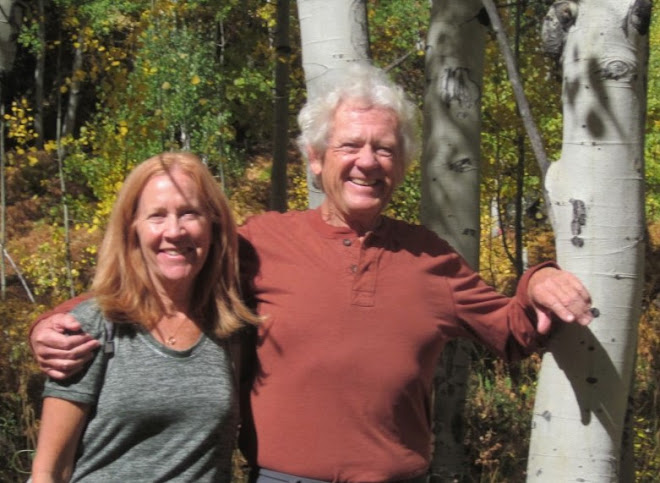
Pat and Ron's Travel Adventures
Friday, April 29, 2011

Feb- April 2011 Phoenix
After spending December and January island-hopping in Hawaii, we down-shifted to pick somewhere else warm to spend the rest of the winter. Since our national winter weather continues to be above average rain/snowfall and below average temperatures, staying in the Sonoran Desert seemed beneficial. Staying in the Salt River Valley area near Phoenix in a rental apartment allowed us to take advantage of the infrastructure of an urban area, such as having a TV, a washer/dryer, internet access, and having an actual address for shipments. We even joined Blockbuster-by-mail temporarily, all while enjoying temperate weather and maintaining our Hawaiian tans. The balmy evenings allowed for romantic experiences of patio dining, full moon hikes in the desert, watching sunsets, and gazing at starry, clear skies. Orion’s belt and Sirius have become as familiar to us as the Big Dipper and North Star.
In addition to the frequent pool time, we filled our days of fun with hikes in the desert (still have not found Lost Dutchman’s mine, but we did manage to avoid rattlesnakes, tarantulas and scorpions), listening to outdoor concerts in botanical gardens, seeing the desert scenery come alive with spring, listening to the many songbirds, smelling the orange blossoms and roses in bloom, feasting on fresh citrus right off the trees, and watching the Rockies spring training at the new Salt River Fields here in the Spring Training “cactus league.”
For Pat’s birthday, we stayed in a cabin directly on the south rim of the Grand Canyon with a big picture window framing a spectacular view of one of the Seven Wonders of the Natural World. We were blessed with seeing a pair of California Condors that have been introduced nearby and use the Grand Canyon as their home. California Condors were once nearly extinct and numbered a mere 22. They are coming back due to a captivity breeding program and reintroduction into the wild, now number ~175 in the wild. They have a 9-foot wingspan and can weigh up to 26 pounds and are the largest bird in North America. Since all of them have been tagged, we could look up the exact age and gender of the two that we saw (next to a Raven in our photo which is no small bird either.)
Other side-trips included a visit to Montezuma’s castle, a five story prehistoric Indian cliff dwelling, which is amazingly well preserved. We also went to Sedona to view the breathtaking red rocks and to feel the energy of the vortexes that Sedona is famous for.
All in all, this has been different for us to stay in one spot for so long. While there was a certain benefit and enjoyment to these few months, we do feel a calling to begin our travels again. This will begin our fifth year of this nomad lifestyle of following the winds of adventure that takes us on our random escapades. We continue to affirm that this lifestyle suits us well. Our enjoyment of freedom has not been tempered and our thirst for changing venues has not been quenched. We will soon be rolling once again, west to California then north, so stay tuned for the next chapter of Ron and Pat’s Greatest Adventures.
In addition to the frequent pool time, we filled our days of fun with hikes in the desert (still have not found Lost Dutchman’s mine, but we did manage to avoid rattlesnakes, tarantulas and scorpions), listening to outdoor concerts in botanical gardens, seeing the desert scenery come alive with spring, listening to the many songbirds, smelling the orange blossoms and roses in bloom, feasting on fresh citrus right off the trees, and watching the Rockies spring training at the new Salt River Fields here in the Spring Training “cactus league.”
For Pat’s birthday, we stayed in a cabin directly on the south rim of the Grand Canyon with a big picture window framing a spectacular view of one of the Seven Wonders of the Natural World. We were blessed with seeing a pair of California Condors that have been introduced nearby and use the Grand Canyon as their home. California Condors were once nearly extinct and numbered a mere 22. They are coming back due to a captivity breeding program and reintroduction into the wild, now number ~175 in the wild. They have a 9-foot wingspan and can weigh up to 26 pounds and are the largest bird in North America. Since all of them have been tagged, we could look up the exact age and gender of the two that we saw (next to a Raven in our photo which is no small bird either.)
Other side-trips included a visit to Montezuma’s castle, a five story prehistoric Indian cliff dwelling, which is amazingly well preserved. We also went to Sedona to view the breathtaking red rocks and to feel the energy of the vortexes that Sedona is famous for.
All in all, this has been different for us to stay in one spot for so long. While there was a certain benefit and enjoyment to these few months, we do feel a calling to begin our travels again. This will begin our fifth year of this nomad lifestyle of following the winds of adventure that takes us on our random escapades. We continue to affirm that this lifestyle suits us well. Our enjoyment of freedom has not been tempered and our thirst for changing venues has not been quenched. We will soon be rolling once again, west to California then north, so stay tuned for the next chapter of Ron and Pat’s Greatest Adventures.
Friday, January 28, 2011
January in Maui and Kauai
Maui is one of the most popular tourist destinations of any of Hawaii’s islands and also has many things to do. Maui, as with all the islands, has only a few, windy, narrow roads since access around the mountains can be limited. While we were there, rain storms, flashfloods, and rock slides closed the roads to Hana, Kihei, and Lahaina!
The remoteness and serenity of the Hana area on the east side of Maui is mainly due to the famous “road to Hana” which is not for the faint-hearted. But with road improvements many people have discovered its beauty and make the journey from the west side daily. It is still beautiful and serene and we were glad we chose to stay for a week there, getting ahead of the crowds for such sights as the lava flow in Haleakala National Park, Venus Pool and Seven Sacred Pools, Charles Lindberg’s grave, and Waianapanapa Black Sand Beach.
Kahanu Gardens, located on beautiful shoreline acreage, is one of the National Tropical Botanical Gardens and showcases native and Polynesian-introduced plants. A massive temple started in the late 1200’s and finished in 1570, called Pi’ilanihale Heiau, covers more than three acres itself. Notes of interest from a few plants there: Bamboo is the fastest growing plant in the world. The record is 4 ft in a 24 hour period! Breadfruit Trees have fruit that can get up to 10 lbs, and are 5-8” in diameter. The Hau plants have flowers that are yellow in the morning and turn red in the evening. Children are told to be home before the hau blossom turns red.
On the western side of Maui is the center of the island’s activities, the most popular being whale watching boat trips this time of the year. They did not disappoint! We saw the whales up close. There were breaching over and over so many times that we lost count, fin slapping, travelling with their young, travelling alongside the boat, and diving (showing their humpback posture and tails.) There are ~20,000 humpback whales in existence and they are still an endangered species, although increasing in number. 60% of them winter in Hawaii. Japan and Mexico are the other main breeding areas. Norway, Japan, & Iceland still hunt whales and do not abide by the International Whaling Commission’s ban on commercial whaling, calling their kills “scientific.” The area in-between Lana’i, Maui, Moloka’i (leprosy settlement in 1800s), and Kaho’olawe is the primary Hawaii winter area, as the water is shallower and warmer (no predator orcas or sharks) for their birthing and breeding. Only the males do the singing and each group (Hawaiian, Mexican, Japanese) sing their own group tune. The whales do not feed while in Hawaii and lose much weight before their trek back to Alaska or Russia. Gestation is nearly a year, and calves weigh 2 tons at birth, are nursed for 10-12 months, and double in length their first year. Whales do not mate for life, or for very long for that matter.
We attended a Luau that was more native than touristy. They served potent mai tai’s, as well as traditional cuisine including poi, Kalua pork (cooked in underground oven lined with banana leaves and covered with burlap and sand,) Polynesian Mahi-Mahi, Kuili chicken, Ahi, taro salad, and much more, earning praise from Zagat Survey and Emeril Live and many guidebooks. The entertainment portion included Tahitian drumming and showed the migration of the hula dancing starting with ancient hula, the changes with the Polynesian’s arrival in Hawaii, going through the missionary period, and up to today’s contemporary version.
Kauai is the most northern island and, as such, receives the brunt of the oncoming weather. The Hawaiians believe that the 7th chakra is located there and the energy from the gods for the islands passes through here. It is the oldest island, the most mountainous, and, as a result, has the most inaccessible amount of land area. The famous rugged Na Pali Coast is viewable by boat, airplane, or the famous 11 mile Kalalau Trail.
We decided that a helicopter trip around the island of Kauai was the best way for us to experience these mostly inaccessible parts of the island. It was an overcast day but the clouds were higher up so we still were able to see the island. We couldn’t even imagine how many waterfalls could be on one island as they were falling all over each other. The Wai’ale’ale Crater is a 3-sided wall of waterfalls 3,000’ high with a lushness that is beyond comprehension. It gets an average of 440” rain/year and is the rainiest spot on the planet. The top of the peak was covered in cloud as it almost always is. Kauai is so green and is like no other place in the world. Over 90% of the Kauai is completely inaccessible and this trip showed us why. The beauty of the backcountry is beyond description in its lushness, greenness, and primitiveness.
Kaliuea Lighthouse National Wildlife Refuge is where we saw many spouting and breeching humpback whales, red-footed boobies covering nearby cliffs, albatrosses dancing their mating dance, and frigatebirds in flight. These birds have 6, 7 and 8 feet wingspans respectively and are amazing to watch soar.
It is impossible to talk about any island in Hawaii without mentioning the beaches. There are red, black, and white sand beaches. Some beaches are protected by bays or coral reefs providing calm water for swimming and snorkeling. Others have high waves and rugged coasts. Some are tough hikes to access and some can be driven to. All are beautiful to visit. There is a wealth of choices from which to swim, snorkel (once with a large sea turtle), watch waves, watch surfers, look for whales, or just lie in the sun. Many of these beaches have been used in Hollywood films (as have the lush valleys and waterfalls on the islands) such as “South Pacific”, “Jurassic Park”, “Six Days, Seven Nights”, “From Here to Eternity”, and “Raiders of the Lost Ark.”
Our two months in Hawaii have gone by quickly. A more adventuresome winter with great weather could not be imagined. The people were wonderful and the aloha spirit was seen everywhere. While we have done so much, we still have things on our list saved for the next time. We will return someday. Until then we had to say Aloha and mahalo to our only state that was once a kingdom.
We are in the Phoenix area now through the end of April catching up with friends, playing tennis, working out, hiking, sightseeing in the state, seeing the desert in bloom, and, in general, having a great time until the weather warms up elsewhere.
Until next blog, Happy Trails!
Pat & Ron
The remoteness and serenity of the Hana area on the east side of Maui is mainly due to the famous “road to Hana” which is not for the faint-hearted. But with road improvements many people have discovered its beauty and make the journey from the west side daily. It is still beautiful and serene and we were glad we chose to stay for a week there, getting ahead of the crowds for such sights as the lava flow in Haleakala National Park, Venus Pool and Seven Sacred Pools, Charles Lindberg’s grave, and Waianapanapa Black Sand Beach.
Kahanu Gardens, located on beautiful shoreline acreage, is one of the National Tropical Botanical Gardens and showcases native and Polynesian-introduced plants. A massive temple started in the late 1200’s and finished in 1570, called Pi’ilanihale Heiau, covers more than three acres itself. Notes of interest from a few plants there: Bamboo is the fastest growing plant in the world. The record is 4 ft in a 24 hour period! Breadfruit Trees have fruit that can get up to 10 lbs, and are 5-8” in diameter. The Hau plants have flowers that are yellow in the morning and turn red in the evening. Children are told to be home before the hau blossom turns red.
On the western side of Maui is the center of the island’s activities, the most popular being whale watching boat trips this time of the year. They did not disappoint! We saw the whales up close. There were breaching over and over so many times that we lost count, fin slapping, travelling with their young, travelling alongside the boat, and diving (showing their humpback posture and tails.) There are ~20,000 humpback whales in existence and they are still an endangered species, although increasing in number. 60% of them winter in Hawaii. Japan and Mexico are the other main breeding areas. Norway, Japan, & Iceland still hunt whales and do not abide by the International Whaling Commission’s ban on commercial whaling, calling their kills “scientific.” The area in-between Lana’i, Maui, Moloka’i (leprosy settlement in 1800s), and Kaho’olawe is the primary Hawaii winter area, as the water is shallower and warmer (no predator orcas or sharks) for their birthing and breeding. Only the males do the singing and each group (Hawaiian, Mexican, Japanese) sing their own group tune. The whales do not feed while in Hawaii and lose much weight before their trek back to Alaska or Russia. Gestation is nearly a year, and calves weigh 2 tons at birth, are nursed for 10-12 months, and double in length their first year. Whales do not mate for life, or for very long for that matter.
We attended a Luau that was more native than touristy. They served potent mai tai’s, as well as traditional cuisine including poi, Kalua pork (cooked in underground oven lined with banana leaves and covered with burlap and sand,) Polynesian Mahi-Mahi, Kuili chicken, Ahi, taro salad, and much more, earning praise from Zagat Survey and Emeril Live and many guidebooks. The entertainment portion included Tahitian drumming and showed the migration of the hula dancing starting with ancient hula, the changes with the Polynesian’s arrival in Hawaii, going through the missionary period, and up to today’s contemporary version.
Kauai is the most northern island and, as such, receives the brunt of the oncoming weather. The Hawaiians believe that the 7th chakra is located there and the energy from the gods for the islands passes through here. It is the oldest island, the most mountainous, and, as a result, has the most inaccessible amount of land area. The famous rugged Na Pali Coast is viewable by boat, airplane, or the famous 11 mile Kalalau Trail.
We decided that a helicopter trip around the island of Kauai was the best way for us to experience these mostly inaccessible parts of the island. It was an overcast day but the clouds were higher up so we still were able to see the island. We couldn’t even imagine how many waterfalls could be on one island as they were falling all over each other. The Wai’ale’ale Crater is a 3-sided wall of waterfalls 3,000’ high with a lushness that is beyond comprehension. It gets an average of 440” rain/year and is the rainiest spot on the planet. The top of the peak was covered in cloud as it almost always is. Kauai is so green and is like no other place in the world. Over 90% of the Kauai is completely inaccessible and this trip showed us why. The beauty of the backcountry is beyond description in its lushness, greenness, and primitiveness.
Kaliuea Lighthouse National Wildlife Refuge is where we saw many spouting and breeching humpback whales, red-footed boobies covering nearby cliffs, albatrosses dancing their mating dance, and frigatebirds in flight. These birds have 6, 7 and 8 feet wingspans respectively and are amazing to watch soar.
It is impossible to talk about any island in Hawaii without mentioning the beaches. There are red, black, and white sand beaches. Some beaches are protected by bays or coral reefs providing calm water for swimming and snorkeling. Others have high waves and rugged coasts. Some are tough hikes to access and some can be driven to. All are beautiful to visit. There is a wealth of choices from which to swim, snorkel (once with a large sea turtle), watch waves, watch surfers, look for whales, or just lie in the sun. Many of these beaches have been used in Hollywood films (as have the lush valleys and waterfalls on the islands) such as “South Pacific”, “Jurassic Park”, “Six Days, Seven Nights”, “From Here to Eternity”, and “Raiders of the Lost Ark.”
Our two months in Hawaii have gone by quickly. A more adventuresome winter with great weather could not be imagined. The people were wonderful and the aloha spirit was seen everywhere. While we have done so much, we still have things on our list saved for the next time. We will return someday. Until then we had to say Aloha and mahalo to our only state that was once a kingdom.
We are in the Phoenix area now through the end of April catching up with friends, playing tennis, working out, hiking, sightseeing in the state, seeing the desert in bloom, and, in general, having a great time until the weather warms up elsewhere.
Until next blog, Happy Trails!
Pat & Ron
Wednesday, December 29, 2010
December on Oahu and the Big Island of Hawaii
Even though most of us have been to Hawaii, have seen Elvis in “Blue Hawaii, “Magnum P.I” or “Hawaii 5-0” on TV, have heard “Tiny Bubbles” or the “Hawaiian Wedding Song”, we would like to share some of the outstanding aspects and observations of Hawaii. We were going to wait until we finished all the islands, but have decided to do 2 blogs instead (December on Hawaii and Oahu, and January on Maui and Kauai).
The state of Hawaii is comprised of eight islands represented by the eight stripes in the state flag. The islands were created by volcanic activity (and still are being created!) and are on the Pacific “rim of fire”. Hawaii has lush tropical jungles and stark lava-covered rock. The Pu’u O’o vent of the Kilauea Caldera (in the Hawaii Volcanoes National park) is the site of the most recent eruptions, with lava flows that wiped out an entire town and most of the homes there. Since 1983 when this volcano reawakened, the lava has created an additional 45 square miles, making it the newest land in the United States. It is possible to get close enough to the lava flow to get burned and especially breathtaking at night. What a primordial show!
The Big Island has 10 of the 15 types of climate zones in the word (not the coldest ones.) Elevations go from sea level to 13,000+ feet mountain tops. The Kona area receives only 10” annually, while Hilo is the wettest city in the United States, with an annual rainfall of 120” (but usually during the nighttime or in short bursts.) This results in a tropical jungle, prolific flowers, lush rainforests, numerous waterfalls, and breathtaking rainbows. Is it any wonder that they chose the rainbow for the license plates?
Crops here are plentiful and include pineapple, bananas, guavas, papayas, mangoes, avocados, taro, coffee, and coconuts. Apple Bananas were new to us and are much smaller than a regular banana and much sweeter. The sugar industry was once a major plantation crop but is now grown only on Kauai.
Flowers and blossoms are unique, exotic, and prolific here as you can see from a few sample photos. Poinsettias grow on bushes, some like hedgerows! And the Big Island is the Orchid Island.
Honolulu is a vibrant city with a blend of races and cultures that makes up Hawaii. There is the hustle-bustle of a city as well as a quiet relaxed setting of swaying coconut trees. Honolulu has 80% of Hawaii’s population, not counting the tourists. Shopping includes more high-end stores like Tiffany’s and Cartier’s than we remembered, but the local stores are still operating as well. We did not find prices to be extremely out of line for any commodity.
Since we were there the week of December 7th, a real highlight was our trip to Pearl Harbor and the USS Arizona Memorial and the Pearl Harbor survivors we met there. There are still ~3 quarts of oil leaking from the battleship each day, visible on the water surface. There are markers in the harbor where each battleship was located when blasted. We toured the privately owned “USS Missouri” battleship on nearby Ford Island. We saw the exact spot where Mac Arthur and the Japanese signed the treaty ending WWII (when the Missouri was in Tokyo Harbor) with a copy of that document on board.
We also visited the Punchbowl National Cemetery. It was in a crater with beautiful views and had a wall of murals depicting the Pacific battles in WWII. People left live flowers at the graves since they grow in everyone’s backyards. Ernie Pyle, the WWII news correspondent is buried there.
To complete Oahu, we stayed on the north shore at Turtle Bay, close to the Bonzai Pipeline where the Billabong surfing contest was in process. The entire area is dedicated to surfing and surfers. The road along the North Shore was beautiful and dead-ends at a nature preserve with ~20 albatross nests. On the drive to the North Shore were numerous gorgeous beaches including “From Here to Eternity” beach and many others that Hollywood filmed.
Our activities included snorkeling, hiking, watching waves, eating the local seafood (Ahi, Ono, Mahi Mahi, Monchong, and Opakapaka are some of them), watching sunsets from beachside cafes, looking at flowers, birds, & turtles, looking for monk seals, dolphins and whales, sampling the Mai Tai’s, poking around small villages, looking at scenery, and visiting museums and historical spots.
South Point on the Big Island is 500 miles south of Key West and is the southernmost point in the 50 United States. It sits on lava rock and has nothing going on there except that distinction. That and the swift current that will take you to Australia if you make the mistake of getting caught in it. Hawaiian fishermen tie their boats to the tie points in the cliffs to prevent this. The water is too deep for anchors.
While the Big Island isn’t known for its beaches, they do have black sand beaches (from the lava rock), green sand beaches (from olivine), salt and pepper beaches, and more normal sand-colored as well. The resort area (NW part of island called Kohala) has the best tourist beaches on this island. Kona has the best snorkeling opportunities with calm, clear water. While snorkeling, we saw hundreds of fish of many varieties along with sea turtles, eels, and colorful living coral.
We stayed in a bungalow on a banana plantation (Kona) and at a yurt in the flowering jungle (Hilo) surrounded by plants and flowers, with complete privacy on all sides. Funky, which fits us. As someone told us, we knew not to look for you at the Ritz.
Each island has its own uniqueness and we want to experience it all. We’re off to Maui next and hope to hear from you soon. Happy New Year!
The state of Hawaii is comprised of eight islands represented by the eight stripes in the state flag. The islands were created by volcanic activity (and still are being created!) and are on the Pacific “rim of fire”. Hawaii has lush tropical jungles and stark lava-covered rock. The Pu’u O’o vent of the Kilauea Caldera (in the Hawaii Volcanoes National park) is the site of the most recent eruptions, with lava flows that wiped out an entire town and most of the homes there. Since 1983 when this volcano reawakened, the lava has created an additional 45 square miles, making it the newest land in the United States. It is possible to get close enough to the lava flow to get burned and especially breathtaking at night. What a primordial show!
The Big Island has 10 of the 15 types of climate zones in the word (not the coldest ones.) Elevations go from sea level to 13,000+ feet mountain tops. The Kona area receives only 10” annually, while Hilo is the wettest city in the United States, with an annual rainfall of 120” (but usually during the nighttime or in short bursts.) This results in a tropical jungle, prolific flowers, lush rainforests, numerous waterfalls, and breathtaking rainbows. Is it any wonder that they chose the rainbow for the license plates?
Crops here are plentiful and include pineapple, bananas, guavas, papayas, mangoes, avocados, taro, coffee, and coconuts. Apple Bananas were new to us and are much smaller than a regular banana and much sweeter. The sugar industry was once a major plantation crop but is now grown only on Kauai.
Flowers and blossoms are unique, exotic, and prolific here as you can see from a few sample photos. Poinsettias grow on bushes, some like hedgerows! And the Big Island is the Orchid Island.
Honolulu is a vibrant city with a blend of races and cultures that makes up Hawaii. There is the hustle-bustle of a city as well as a quiet relaxed setting of swaying coconut trees. Honolulu has 80% of Hawaii’s population, not counting the tourists. Shopping includes more high-end stores like Tiffany’s and Cartier’s than we remembered, but the local stores are still operating as well. We did not find prices to be extremely out of line for any commodity.
Since we were there the week of December 7th, a real highlight was our trip to Pearl Harbor and the USS Arizona Memorial and the Pearl Harbor survivors we met there. There are still ~3 quarts of oil leaking from the battleship each day, visible on the water surface. There are markers in the harbor where each battleship was located when blasted. We toured the privately owned “USS Missouri” battleship on nearby Ford Island. We saw the exact spot where Mac Arthur and the Japanese signed the treaty ending WWII (when the Missouri was in Tokyo Harbor) with a copy of that document on board.
We also visited the Punchbowl National Cemetery. It was in a crater with beautiful views and had a wall of murals depicting the Pacific battles in WWII. People left live flowers at the graves since they grow in everyone’s backyards. Ernie Pyle, the WWII news correspondent is buried there.
To complete Oahu, we stayed on the north shore at Turtle Bay, close to the Bonzai Pipeline where the Billabong surfing contest was in process. The entire area is dedicated to surfing and surfers. The road along the North Shore was beautiful and dead-ends at a nature preserve with ~20 albatross nests. On the drive to the North Shore were numerous gorgeous beaches including “From Here to Eternity” beach and many others that Hollywood filmed.
Our activities included snorkeling, hiking, watching waves, eating the local seafood (Ahi, Ono, Mahi Mahi, Monchong, and Opakapaka are some of them), watching sunsets from beachside cafes, looking at flowers, birds, & turtles, looking for monk seals, dolphins and whales, sampling the Mai Tai’s, poking around small villages, looking at scenery, and visiting museums and historical spots.
South Point on the Big Island is 500 miles south of Key West and is the southernmost point in the 50 United States. It sits on lava rock and has nothing going on there except that distinction. That and the swift current that will take you to Australia if you make the mistake of getting caught in it. Hawaiian fishermen tie their boats to the tie points in the cliffs to prevent this. The water is too deep for anchors.
While the Big Island isn’t known for its beaches, they do have black sand beaches (from the lava rock), green sand beaches (from olivine), salt and pepper beaches, and more normal sand-colored as well. The resort area (NW part of island called Kohala) has the best tourist beaches on this island. Kona has the best snorkeling opportunities with calm, clear water. While snorkeling, we saw hundreds of fish of many varieties along with sea turtles, eels, and colorful living coral.
We stayed in a bungalow on a banana plantation (Kona) and at a yurt in the flowering jungle (Hilo) surrounded by plants and flowers, with complete privacy on all sides. Funky, which fits us. As someone told us, we knew not to look for you at the Ritz.
Each island has its own uniqueness and we want to experience it all. We’re off to Maui next and hope to hear from you soon. Happy New Year!
Wednesday, November 24, 2010
Subscribe to:
Posts (Atom)